How do I set up a custodial crypto wallet?
Looking to find out how to set up a custodial cryptocurrency wallet? Check out our easy-to-follow guide on choosing and setting up a custodial wallet.
Read this article →Multichain Is a practical way to understand cross-chain bridges, multi-chain wallets, and the steps involved in moving crypto assets between blockchain networks. It explains how routing, wrapped tokens, liquidity pools, wallet connections, fees, and safety checks fit together so users can make better decisions before sending assets across chains. Multichain also helps describe a broader Web3 idea: one account experience that can interact with several networks instead of staying locked to a single blockchain.
Multichain is most useful when a user needs assets on a different network than the one where they currently sit. A token may be on Ethereum, while a game, decentralized exchange, lending market, or NFT marketplace may run on Polygon, BNB Smart Chain, Avalanche, Fantom, Arbitrum, Optimism, Solana, or another ecosystem. The basic problem is simple: blockchains do not automatically share balances with each other. Multichain tools exist to make that movement possible, but every transfer still deserves careful verification.
Multichain can refer to the named cross-chain bridge and router project associated with the Multichain brand, and it can also describe the general multi-chain pattern used by wallets, bridges, and decentralized applications. This guide uses Multichain as the main topic while also explaining the wider concepts users search for: interoperability, bridge mechanics, transaction fees, supported networks, wallet setup, and safety practices. It is informational only and should not be treated as financial advice.
Multichain is tied to the idea of blockchain interoperability, which means making separate networks easier to use together. A single blockchain has its own validators, consensus rules, transaction format, native token, and smart contract environment. Those rules let that chain operate, but they also make direct communication with another chain difficult. Multichain services try to solve that gap by creating paths for assets or messages to move between networks.
Multichain became known as a cross-chain bridge and router that supported transfers across many networks. In plain terms, a bridge helps a user move value from one chain to another, while a router tries to find an appropriate method for that movement. Sometimes that means locking a token on one chain and minting a representative version on another. Sometimes it means swapping through liquidity that already exists on both chains.
Multichain also belongs in the same conversation as multi-chain wallets. A wallet does not usually move assets by itself; it holds keys and signs transactions. However, a wallet that supports multiple networks can connect to different decentralized applications, display assets on several chains, and make bridge workflows easier to manage. For a broader wallet-focused explanation, readers may find useful alongside this guide.
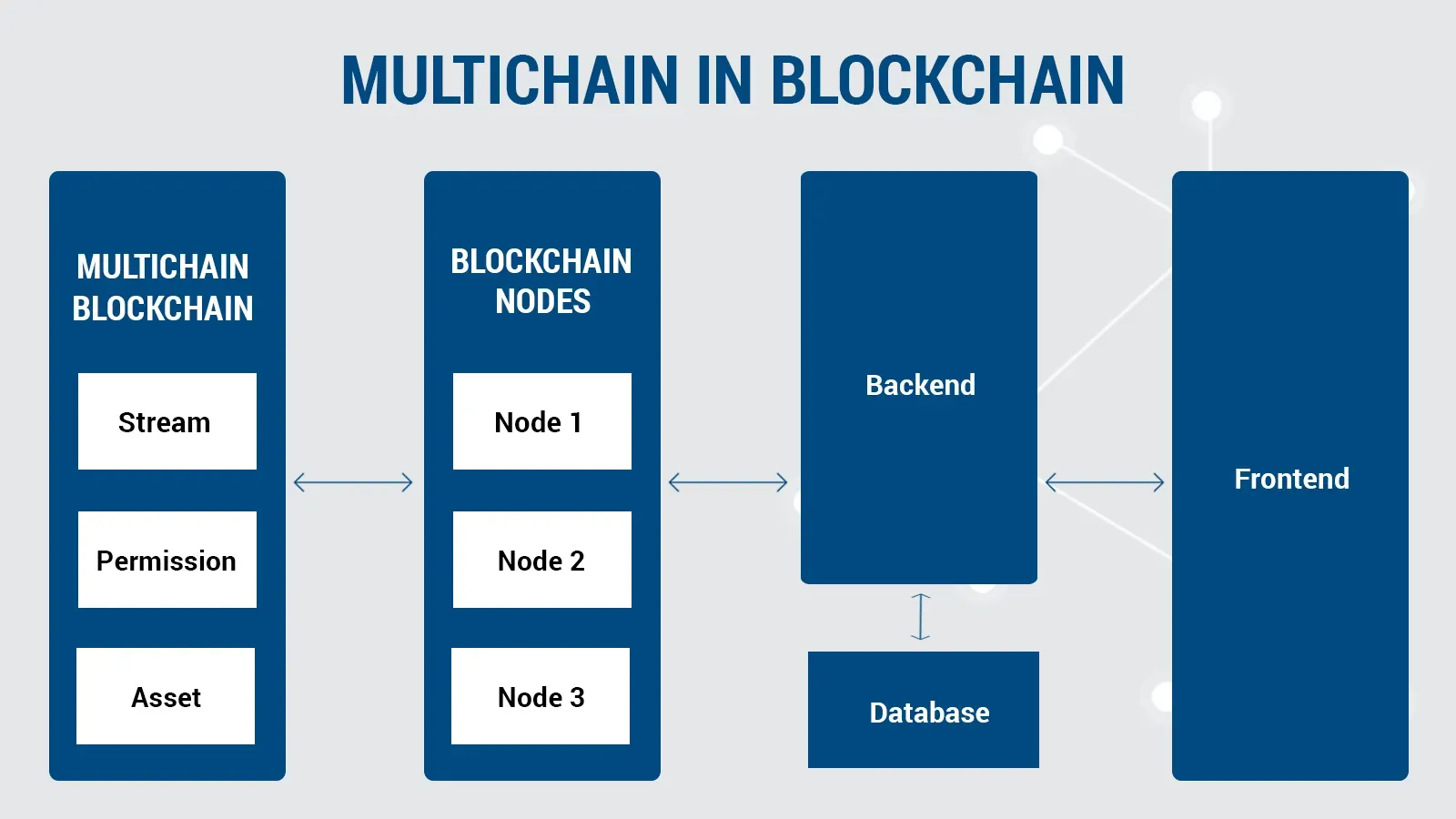
Multichain bridge activity depends on smart contracts, liquidity, network messages, and transaction signatures. When a user starts a transfer, the bridge needs to confirm that assets were deposited, locked, burned, or otherwise accounted for on the source chain. Then a corresponding action occurs on the destination chain. The user experiences this as a transfer, but under the hood it is usually a coordinated sequence of blockchain transactions.
Multichain workflows often involve wrapped assets. A wrapped asset represents a token from another network. For example, if a token is locked in a contract on Chain A, a related token may be minted on Chain B to represent that claim. This is convenient, but it introduces dependency on the bridge design, contract security, liquidity, and any entities or mechanisms responsible for validating cross-chain events.
Multichain routing can also use liquidity pools. Instead of minting a new representation of an asset, a bridge may allow a user to deposit one asset on the source chain and receive an equivalent or related asset from available liquidity on the destination chain. Liquidity providers may earn fees, while users benefit from a more direct experience. The tradeoff is that routes can be limited by available liquidity, slippage, minimum amounts, and network conditions.
Multichain tools are popular because crypto activity is spread across many ecosystems. Ethereum may have deep DeFi liquidity, while other networks may offer lower fees, different applications, faster confirmation times, gaming communities, NFT collections, or specialized infrastructure. A user who only stays on one chain may miss applications that require assets somewhere else.
Multichain access is also important for builders. A token project may want liquidity on several chains, a decentralized application may want users from multiple ecosystems, and a DAO may need treasury operations across different networks. Cross-chain infrastructure can make that possible, although it does not remove the need for audits, monitoring, governance controls, and clear user communication.
Multichain use cases usually fall into a few practical categories:
Multichain does not make every transfer appropriate. A bridge may support one version of a token but not another, and a destination application may only accept a specific contract address. Users should verify token contracts, network names, bridge status, minimum transfer amounts, and destination wallet compatibility before sending funds.
Multichain workflows vary by interface, network, and wallet, but the core steps are usually similar. A user starts with a wallet that supports the source network and destination network. The wallet must contain the asset to be bridged and enough native gas token to pay for the source-chain transaction. In many cases, the destination chain also requires its own gas token for later activity.
Multichain transfers should begin with verification. Users should confirm they are on the intended site or application, check official channels for current availability, and avoid links from unsolicited messages. Bridge domains, supported chain lists, and token contracts can change, and phishing pages often imitate well-known bridge interfaces. If the transaction is meaningful, sending a small test amount first is a cautious habit.
Multichain bridge steps commonly look like this:
Multichain users should keep records of transaction hashes from both networks when available. If a transfer is delayed, those hashes help identify whether the issue is a pending source transaction, a bridge processing delay, a liquidity limitation, or a wallet display problem. A missing wallet balance does not always mean funds are lost; sometimes the token simply needs to be imported on the destination network.
Multichain fees can include several different costs. The most visible cost is the gas fee paid to the source blockchain. Depending on the design, the user may also pay a bridge fee, a liquidity provider fee, or receive slightly less because of route mechanics and slippage. On some networks, gas prices can change quickly, so the final cost may differ from an early estimate.
Multichain timing also depends on the networks involved. A transfer between fast, low-cost networks may complete quickly, while a route involving congested chains or extra confirmation requirements can take longer. Some transfers appear in minutes; others may require more patience. Users should not assume that a bridge delay is automatically a failure, but they should monitor official status information and transaction explorers.
| Cost or delay factor | What it means for a user |
|---|---|
| Source-chain gas | The fee paid to submit the initial transaction from the wallet. |
| Destination-chain gas | The native token needed later to move or swap funds after arrival. |
| Bridge or router fee | A service or liquidity fee that may be included in the transfer quote. |
| Slippage and liquidity | The received amount can change if liquidity is thin or the route is busy. |
| Confirmation time | Some routes wait for more blocks before releasing funds on the destination chain. |
Multichain cost comparisons should include the full workflow, not just the bridge quote. A route that looks cheap may still require an extra swap, a token approval, or a destination gas purchase. For more detail on bridge-specific tradeoffs, this can help frame the mechanics without assuming one route is always best.
Multichain safety requires a careful answer because cross-chain bridges are complex and have been frequent targets across the crypto industry. A bridge may depend on smart contracts, validators, multi-party computation, liquidity pools, administrative controls, oracle-like message passing, or off-chain monitoring. Any weak point can create risk. Users should treat bridge activity as higher risk than a simple transfer within one blockchain.
Multichain has also been associated with periods of operational concern and public scrutiny, which is why users should verify the current status from official sources before attempting any transfer. Supported networks, bridge availability, token routes, and project communications can change. This guide cannot guarantee that any specific bridge route is live, secure, liquid, or appropriate for a particular user.
Multichain risk management starts with small, practical checks. Confirm the URL from trusted sources, compare token contract addresses, read the latest status messages, and use transaction explorers to review activity. Avoid granting unlimited approvals when a smaller allowance is practical, and consider revoking approvals that are no longer needed. For large transfers, a test transaction can reveal network, wallet, or route problems before more funds are at stake.
Multichain users should also understand custody. A self-custody wallet gives the user control of private keys, but it also means mistakes are usually irreversible. A bridge transaction sent to the wrong chain, wrong address, unsupported token contract, or malicious interface may be difficult or impossible to recover. No guide can remove that risk, so independent verification matters.
Multichain is one part of a larger cross-chain landscape. Other approaches include centralized exchange withdrawals, native bridges operated by specific ecosystems, generalized messaging protocols, decentralized liquidity networks, rollup bridges, and wallet-integrated swap tools. Each approach makes different tradeoffs between convenience, speed, supported assets, trust assumptions, and transparency.
Multichain-style bridges are often attractive because they aim to support many chains from one interface. A native ecosystem bridge may be narrower but more directly aligned with a specific network. A centralized exchange may be familiar to some users, but it introduces custodial steps and account requirements. A wallet-integrated bridge may be convenient, but users still need to inspect the underlying route and fees.
Multichain comparisons should focus less on brand names and more on the actual route. The important questions are whether the route supports the exact asset, whether liquidity is sufficient, what contracts are involved, what fees apply, how long settlement may take, and what happens if processing is delayed. A well-informed user evaluates the mechanics instead of assuming that every bridge works the same way.
Multichain is easiest to understand as a set of bridges, routers, wallets, and habits that make multi-network crypto activity possible. The promise is convenience: one user can participate in several ecosystems without manually managing separate tools for every chain. The tradeoff is complexity: every added network, contract, wrapped token, and route introduces more details to verify.
Multichain beginners should learn the difference between a network and a token. USDC, ETH, BTC representations, governance tokens, and game assets may exist in different forms on different chains. A token symbol alone is not enough proof that an asset is the correct one. Contract addresses, official documentation, explorer pages, and application requirements are more reliable than a familiar ticker.
Multichain also rewards patience. Users who rush tend to skip the checks that matter most: route status, gas needs, token support, approvals, and destination compatibility. A slow, deliberate workflow is better than trying to save a minute and risking an irreversible transfer. For anyone moving meaningful value, official sources and current status pages should be checked before taking action.
Multichain reflects a practical reality of Web3: no single blockchain contains every useful application, asset, or community. Interoperability tools developed because users wanted to move between ecosystems without starting over each time. Wallets, bridges, and cross-chain messaging systems all point toward a more connected experience, even though the technology is still evolving.
Multichain will remain a useful search term because it captures both the specific history of cross-chain bridge infrastructure and the broader direction of crypto usability. The best user experience would make networks feel less fragmented while still preserving transparency about fees, risks, and trust assumptions. Until then, users should combine convenience with caution.
Multichain is not a guarantee of safety, profit, speed, or access. It is a framework for understanding how assets may move across chains and how wallets can interact with more than one ecosystem. Users who verify official information, understand bridge mechanics, and test unfamiliar routes are better prepared to navigate multi-chain crypto activity responsibly.
Multichain is used to describe cross-chain infrastructure that helps users move assets or interact across more than one blockchain network. In practice, it can involve a bridge, router, wrapped token, liquidity pool, or multi-chain wallet workflow. Users often look at Multichain when they need funds on a different network for DeFi, NFTs, games, swaps, or lower-fee transactions.
A Multichain bridge usually records an action on the source chain, such as locking, burning, or depositing a token, then triggers a related action on the destination chain. The destination asset may be a wrapped version or may come from liquidity already available there. The details depend on the route, supported token, bridge contracts, and the networks involved.
Multichain and a multi-chain wallet are related but not identical. A multi-chain wallet stores keys, displays balances, switches networks, and signs transactions across supported chains. A Multichain bridge or router focuses on moving assets between chains. Many users need both: the wallet to authorize actions and the bridge to coordinate the cross-chain transfer.
Before using Multichain, verify the official site or application, supported networks, token contract addresses, bridge status, estimated fees, minimum received amount, and destination wallet compatibility. Make sure you have enough gas on the source chain and understand whether the destination chain will require gas later. For meaningful transfers, a small test transaction can reduce avoidable mistakes.
Yes. Cross-chain bridge transfers can be riskier than ordinary same-chain transactions because they may depend on smart contracts, liquidity pools, validators, message passing, administrative controls, and wallet approvals. Errors can be irreversible, and bridge availability can change. Users should verify current details with official sources and avoid treating any bridge route as guaranteed.
A Multichain transfer can be delayed by source-chain congestion, confirmation requirements, bridge processing queues, liquidity limits, route maintenance, or wallet display issues. Transaction explorers can help show whether the first transaction confirmed. If the destination balance does not appear, the asset may need to be imported with the correct token contract before assuming the transfer failed.
No. Multichain tools only support specific networks, assets, and routes, and those lists can change over time. A familiar token symbol does not guarantee that a bridge supports the exact asset version a user holds. Always confirm the current supported chain list, contract address, and route details through official sources before sending funds.
A multi-chain crypto wallet allows you to store assets on—and interact with—multiple blockchain networks (as opposed to just a single network). Multi-chain wallets typically have an interface for controlling which blockchain you’re connected to, making it easy for users to switch between networks as needed. This makes multi-chain crypto wallets a major driver of “interoperability”—the movement to increase compatibility between the otherwise independent blockchains that make up Web3.
As Web3 adoption increases, and as more and more blockchains emerge, multi-chain capability is becoming a must-have feature of many crypto wallets. In this article: an intro to multi-chain crypto wallets, how they work, their advantages (and things to watch out for), and the different options you can try for yourself.
In the context of Web3 , interoperability refers to the ability to readily exchange data between different blockchain networks . Blockchains contain a shared ledger, and the required internal logic for a community of peers to reach consensus about the state of that ledger. By design, blockchains facilitate internal communication (i.e. within the blockchain network), but not external (i.e. outside that particular network). In other words, extra work is needed for distinct blockchains to be able to communicate and work together.
The current state of Web3 is not unlike the early days of the Web—where different technical specifications competed before agreed-upon Web standards (i.e. standardized best practices) were established. That’s why many people are currently building new solutions that enhance the compatibility and interoperability of different blockchains to support the growth of Web3. But that’s also led to some makeshift standards in the process.
When a blockchain is created, rules must be established that govern how the network will operate. These rules are the basis for cooperation between the community of peers that make up the network. These rules—often collectively referred to as a “consensus mechanism”—must dictate how to:
The result is that each blockchain ends up with its own set of rules (and their various technical implications) that don’t often mesh with the rules of another network—at least not without some extra configuration.
In the earlier days of Web3, certain blockchains excelled at certain things, and users would pick and choose between them as needed. You’d use a Bitcoin wallet to store bitcoin on the Bitcoin network and do Bitcoin things; an Ethereum wallet to store ether on the Ethereum network and do Ethereum things; and so on. The lack of interoperability wasn’t seen as much of an issue. But now, as Web3 continues to evolve and become more interconnected, the lines have blurred between the different networks and their use cases.
People often find themselves using different blockchains for different purposes—some unique and others overlapping. It’s no longer the case that, for example, Ethereum is the exclusive home of NFTs ; dozens of blockchains have their own thriving NFT ecosystems. From affordable transactions, to thriving gaming ecosystems, to robust DeFi platforms, there’s a lot of cool stuff being built on many different blockchains.
This pace and breadth of development is exciting, but it also reveals a problem: the lack of compatibility between different blockchains makes their respective ecosystems fairly siloed. It hasn’t always been easy to do things like transfer assets from one blockchain to another, or for a developer to build a DApp and launch it on several networks.
But with advances in interoperability, these things (and many others) are becoming much easier. Perhaps the biggest interoperability innovation is multi-chain crypto wallets, which make it possible to store/manage assets on multiple different blockchains using one wallet. And, relatedly, to connect to DApps on different blockchains from one convenient interface.
Multi-chain crypto wallets are designed to support many different blockchains. That means they’re programmed to know the rules (or consensus mechanism) of each different network they support. This enables multi-chain wallets to communicate with nodes on multiple different networks, enabling users to send/receive assets, and interact with DApps on any blockchain the wallet supports.
Every multi-chain crypto wallet will have its own offering of supported networks (some of which might include Bitcoin, Ethereum, Solana, Polygon, or others). In general, the most popular blockchains (measured by the number of users or transaction volume) warrant the development work necessary to add support for them in multi-chain wallets.
It’s also possible for blockchains to potentially gain more adoption and wallet integration by adhering to development standards set forth by other popular blockchains.
The Ethereum Virtual Machine (or EVM), for example, is the engine that powers Ethereum. It’s the software environment that manages all operations and transactions, and makes it possible for Ethereum to host smart contracts and DApps. Later blockchains have made it a point to be “EVM-compatible,” meaning they’re able to run the EVM and execute Ethereum smart contracts.
Blockchains that are EVM-compatible can host DApps designed for Ethereum without developers having to change the code or start from scratch. And EVM-compatible blockchains that can process Ethereum transactions are easier to add to a multi-chain wallet that already supports Ethereum. This is just one example of how interoperability standards are emerging in Web3.
Similar to how your current Web browser can help you navigate to basically any Web 2.0 site, multi-chain crypto wallets enable users to connect to more blockchains and do more on Web3 without needing extra software. Some of the main advantages of using a multi-chain crypto wallet include:
Using a multi-chain wallet is much like using a single-chain crypto wallet, so you’ll want to follow the same best practices for Web3 security . The only notable difference is that you’ll need to pay close attention to which network you’re connected to in your multi-chain wallet. If you switch from using a single-chain crypto wallet to a multi-chain wallet, you should get accustomed to double checking you’re using the intended network before transacting.
If you’re looking for a secure, multi-chain crypto wallet that’s built right into your browser, check out Brave Wallet . It supports multiple networks like Bitcoin, Ethereum, EVM-compatible chains, Solana, and Filecoin—and it shows all your assets on these networks (including NFTs) in one clean, multi-chain portfolio view. You can manage all kinds of assets (and swap between them) directly in Brave Wallet—from one convenient place within a fast, secure browser. Download Brave and click to get started today.
Looking to find out how to set up a custodial cryptocurrency wallet? Check out our easy-to-follow guide on choosing and setting up a custodial wallet.
Read this article →When it comes to crypto wallets, the two main options are custodial and non-custodial (aka “self-custody”). The difference comes down to private keys. In this primer, we'll discuss the pros and cons of each type, and explain how to set up a self-custody crypto wallet.
Read this article →Not sure which crypto wallet is the most secure for your needs? In this guide, we break down the different elements you should consider when choosing one.
Read this article →