How do I set up a custodial crypto wallet?
Looking to find out how to set up a custodial cryptocurrency wallet? Check out our easy-to-follow guide on choosing and setting up a custodial wallet.
Read this article →Multichain Is a practical way to understand cross-chain bridges: tools that help crypto assets or messages move between separate blockchain networks. In plain terms, Multichain refers to bridge infrastructure associated with Web3 interoperability, where users connect a wallet, choose a source chain and destination chain, and transfer supported tokens. Because bridge systems carry technical, liquidity, and security risk, users should verify current status, contract addresses, fees, and warnings before using any service.
Multichain became known as a cross-chain router and bridge protocol, originally connected to the Anyswap brand, and the name is now often used by searchers who want to understand how bridge transfers work. Multichain is also a broader idea in crypto: applications, wallets, and protocols are increasingly expected to work across Ethereum, BNB Chain, Polygon, Fantom, Arbitrum, Avalanche, Solana, and other networks rather than staying inside one ecosystem.
For a new user, the important point is that Multichain is not the same thing as a normal wallet transfer. A regular transfer usually stays on one blockchain. Multichain-style bridging involves at least two networks, one or more smart contracts, a routing layer or validator process, and a destination asset that may be native, wrapped, minted, or released from a liquidity pool. That extra complexity is useful, but it also creates extra things to check.
Multichain is best described as a cross-chain bridge and router model built around interoperability. In Web3, interoperability means that independent blockchains can exchange value or information even though each chain has its own consensus rules, transaction format, validators, gas token, and application environment. Multichain was designed to reduce the friction of moving assets between these isolated networks.
Multichain matters because crypto activity is spread across many chains. A user may hold stablecoins on Ethereum, trade tokens on Polygon, use a lending market on Arbitrum, play a blockchain game on BNB Chain, or interact with an NFT marketplace on another network. Without a bridge or a multi-chain wallet, those ecosystems feel disconnected. Multichain-style infrastructure tries to make the experience more continuous.
The protocol concept also helps explain why bridge pages can look different from a decentralized exchange. A DEX swaps one asset for another, usually on the same chain or within a specific liquidity system. Multichain bridging focuses on changing where an asset is usable. The user might still hold a representation of the same asset, but it now exists on a different chain with different gas fees, applications, and contract risk.
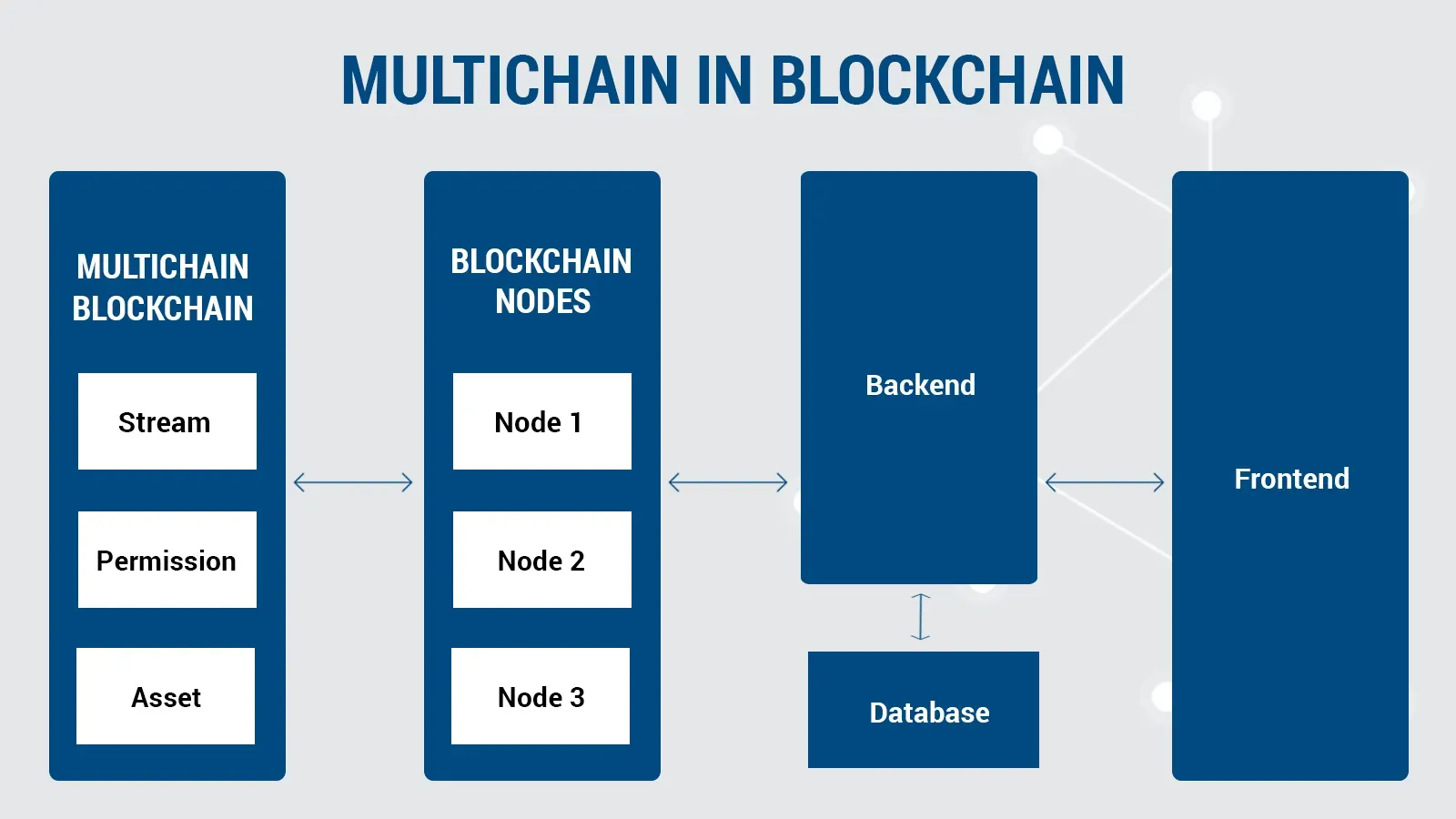
Multichain-style bridging usually begins when a user connects a self-custody wallet and selects a token, a source network, and a destination network. The bridge then shows transfer limits, estimated fees, route availability, and any minimum or maximum amount. If the user approves the token and confirms the transaction, the source-chain contract receives or locks the asset while the destination side releases, mints, or routes the corresponding token.
Multichain systems have commonly used two broad models. One model locks an original token on its native chain and mints a wrapped representation on another chain. When the user returns, the wrapped version is burned and the original asset is released. Another model uses liquidity pools on both sides. The source pool receives the asset, and the destination pool pays out the same or equivalent asset if enough liquidity is available.
The protocol layer is where the hard work happens. Multichain routing needs to observe source-chain transactions, confirm that a transfer is valid, handle finality differences between chains, and trigger the destination-chain result. Ethereum, Bitcoin-like networks, EVM-compatible chains, and non-EVM networks can all have different assumptions. Multichain therefore depends on accurate contract configuration, reliable off-chain or cross-chain message handling, and enough liquidity for the chosen route.
Multichain bridges are used because Web3 activity is not concentrated in one place. A person might want lower fees, faster transactions, access to a DeFi protocol, a specific NFT collection, a gaming ecosystem, or a token that is more liquid on another chain. Multichain gives users a route when a centralized exchange transfer is not practical or when an application expects funds on a particular network.
Multichain can also be useful for teams that want their token to exist across several ecosystems. A project may start on Ethereum, then expand to BNB Chain, Polygon, Fantom, or another EVM-compatible chain to reach different users. In that case, bridge infrastructure can support circulation beyond the original deployment. The project still has to manage liquidity, contract addresses, token representations, and community communication carefully.
In practice, users most often look at Multichain for these situations:
Multichain does not remove the need to understand each destination chain. A bridged token may have a different contract address, different liquidity depth, and different acceptance across exchanges or DeFi platforms. Before sending a large amount, many experienced users test with a small transfer and confirm that the asset appears correctly in the wallet and target application.
Multichain transfers typically follow a predictable sequence, even though the exact interface may vary. The user first checks whether the bridge route is supported for the desired token and chain pair. Then the user connects a wallet, chooses the source and destination, reviews network fees, and confirms any token approval. After that, the bridge transaction is submitted on the source chain and the user waits for completion on the destination chain.
Multichain users should pay special attention to approvals. Many ERC-20 style tokens require an approval transaction before the bridge can move the asset. That approval gives a smart contract permission to spend a token up to a limit. A cautious user reviews the contract, limits approvals where possible, and later revokes permissions that are no longer needed. This is not unique to Multichain, but it is especially relevant for bridge interactions.
The destination step can take seconds, minutes, or longer depending on the chains involved, congestion, confirmation rules, and routing design. Multichain interfaces have historically shown transfer status or transaction tracking, but users should not rely on a page alone. They can also check the source-chain explorer and destination-chain explorer to confirm whether the transaction was accepted, finalized, and credited to the expected address.
For larger transfers, Multichain-style bridging should be treated as an operational process rather than a casual click. Confirm the wallet address, token symbol, token contract, selected chain, bridge route, slippage or fee details, and any warnings shown by the interface. A wrong chain selection can leave funds in a place where the user cannot easily use them, even if the transaction technically succeeds.
Multichain bridge costs can include source-chain gas, destination-chain gas, a protocol fee, a liquidity fee, or a route-specific deduction. Some routes may appear inexpensive because the destination chain has low gas costs. Other routes may cost more because they involve a congested network, a less liquid pool, or a more complex transfer path. The displayed amount received is usually more important than the headline fee.
Multichain routes can also have minimum and maximum transfer limits. A bridge may reject tiny transfers because the operating cost is too high compared with the amount moved. It may also delay or restrict very large transfers because the route needs liquidity, extra confirmations, or security checks. These limits can differ by token, source chain, destination chain, and market conditions.
The safest habit is to treat every Multichain fee estimate as something to verify in the moment. Gas prices change, bridge liquidity changes, and token support can change. Users should compare the expected received amount with alternatives such as a centralized exchange withdrawal, a different bridge, or a native cross-chain route provided by the asset issuer. Multichain can be convenient, but convenience alone should not decide the route.
Multichain and other cross-chain bridges carry meaningful risk. Bridges are attractive targets because they often hold pooled assets, control wrapped token issuance, or coordinate value across several chains at once. Smart contract bugs, compromised keys, validator failures, oracle problems, liquidity shortages, and user mistakes can all affect the final result. No bridge should be treated as risk-free.
Multichain also has a specific history that users should know before taking action. In 2023, Multichain was associated with serious operational disruption and reported unauthorized asset movements, and public reports said operations were halted. Because of that history, anyone researching Multichain today should verify current official information, avoid unofficial mirrors, be skeptical of recovery offers, and confirm whether any interface or contract is actually supported before connecting a wallet.
The protocol risk is separate from market risk. Even if a Multichain route works technically, the token received on the destination chain may trade at a discount, have thin liquidity, or be unsupported by the intended application. Wrapped assets can also depend on the solvency and security of the bridge mechanism that issued them. If that trust breaks, the wrapped token may not behave like the original asset.
Multichain safety checks should be practical. Review announcements from official project channels, inspect contract addresses from trusted sources, search for recent incident reports, check whether major wallets or explorers flag the contract, and avoid urgent messages that ask for seed phrases or private keys. A legitimate bridge does not need a user seed phrase. A wallet signature should be reviewed carefully before approval.
Multichain is related to multi-chain wallets, but the two are not identical. A multi-chain wallet helps users view and manage accounts across multiple networks from one interface. A bridge moves or represents assets across networks. In many workflows the wallet and bridge work together: the wallet signs the source-chain transaction, and the bridge handles the cross-chain routing.
Multichain can also be compared with native bridges, canonical rollup bridges, exchange withdrawals, and cross-chain messaging protocols. A native bridge may be preferred when moving assets into a specific layer 2, because it is maintained by the chain or rollup ecosystem. A centralized exchange may be simpler for some users, but it introduces custody and withdrawal risk. Cross-chain messaging protocols may support broader application logic beyond token movement.
The right alternative depends on the asset, route, urgency, cost, and risk tolerance. Multichain-style bridges are flexible, but flexibility can mean more moving parts. A canonical bridge may be slower but more directly tied to the destination ecosystem. An exchange withdrawal may be easy but requires trusting the exchange. A specialized bridge may offer better liquidity for one token but less coverage across other chains.
Multichain research should start with the current status of the protocol, not with old screenshots or archived tutorials. Crypto interfaces can remain visible after a team has stopped supporting them, and scammers can copy familiar branding. Before connecting a wallet, users should confirm the domain, announcements, contract addresses, and recent community warnings. This is especially important for Multichain because its operational history includes major disruption.
Multichain users should also verify the destination asset. The same ticker can appear on multiple chains while referring to different contracts. A stablecoin, for example, may have an official native version, a bridge-issued version, and several legacy wrapped versions. The difference matters for trading, lending, collateral, and exchange deposits. Sending the wrong representation can make an asset harder to use or impossible to deposit where intended.
For personal security, keep the bridge wallet simple. Many users prefer to bridge from a wallet with only the funds needed for the transfer, then move assets to longer-term storage afterward. Multichain interactions, token approvals, and unfamiliar contracts create less exposure when the connected wallet does not contain every asset a user owns. This is risk management, not a guarantee.
Multichain remains a useful search term because it captures a central Web3 problem: blockchains are powerful but fragmented. Users want assets, applications, and wallets to work across networks without forcing every activity into one chain. Bridge infrastructure tries to solve that fragmentation, and Multichain helped make the idea easier to understand for many crypto users.
At the same time, Multichain is a reminder that interoperability is not just a convenience feature. It is a security and trust design. Every cross-chain route depends on contracts, liquidity, operators, messages, and assumptions that may fail. The practical approach is to learn how Multichain-style bridges work, compare alternatives, test carefully, and verify current information with official sources before moving funds.
Multichain can be understood as both a protocol name and a category lesson. The promise is a more connected Web3, where assets and applications are not trapped in separate ecosystems. The caution is that bridges concentrate complexity. Users who treat Multichain as a technical tool, rather than a guaranteed shortcut, are better prepared to evaluate fees, limits, risks, and safer paths across blockchain networks.
Multichain is commonly understood as a cross-chain bridge and router protocol concept for moving crypto assets between separate blockchain networks. It relates to Web3 interoperability, where users may need funds on Ethereum, Polygon, BNB Chain, Fantom, Arbitrum, or other ecosystems. Because Multichain has a history of operational and security disruption, users should verify current status and official information before interacting with any related service.
A Multichain-style bridge transfer usually starts with a wallet connection, token selection, source chain, and destination chain. The source-side contract may lock or receive the asset, while the destination side mints, releases, or routes an equivalent token. Some routes depend on liquidity pools, while others use wrapped assets. The user should review approvals, fees, limits, destination token contracts, and transaction status before assuming the transfer is complete.
No. Multichain refers to bridge or router infrastructure for moving assets across chains, while a multi-chain wallet is an interface for managing accounts on multiple networks. The two often work together because a wallet signs the bridge transaction. A wallet can support many chains without being a bridge, and a bridge can require a compatible wallet to approve and submit transactions.
The main risks include smart contract bugs, compromised keys, liquidity shortages, delayed transfers, incorrect token contracts, phishing websites, and wrapped assets losing trust or liquidity. Cross-chain bridges have historically been major targets because they coordinate value across multiple networks. Multichain also has a specific history of serious disruption, so users should check current official sources, avoid unofficial links, and test carefully before moving meaningful amounts.
A user might consider a Multichain-style bridge when they want to move assets directly between self-custody wallets and Web3 applications without sending funds to a centralized exchange. Bridges can sometimes support routes or tokens that are inconvenient through exchanges. However, exchange withdrawals and native bridges may be simpler or safer for some routes, so users should compare cost, speed, liquidity, custody risk, and current protocol status.
Before using any Multichain-related interface, verify the current official domain, recent announcements, supported route, token contract address, wallet network, approval request, estimated received amount, minimum and maximum limits, and destination-chain requirements. Because crypto bridge information can change quickly, old tutorials may be unsafe. A small test transaction can help confirm the route, but it does not eliminate bridge or market risk.
A multi-chain crypto wallet allows you to store assets on—and interact with—multiple blockchain networks (as opposed to just a single network). Multi-chain wallets typically have an interface for controlling which blockchain you’re connected to, making it easy for users to switch between networks as needed. This makes multi-chain crypto wallets a major driver of “interoperability”—the movement to increase compatibility between the otherwise independent blockchains that make up Web3.
As Web3 adoption increases, and as more and more blockchains emerge, multi-chain capability is becoming a must-have feature of many crypto wallets. In this article: an intro to multi-chain crypto wallets, how they work, their advantages (and things to watch out for), and the different options you can try for yourself.
In the context of Web3 , interoperability refers to the ability to readily exchange data between different blockchain networks . Blockchains contain a shared ledger, and the required internal logic for a community of peers to reach consensus about the state of that ledger. By design, blockchains facilitate internal communication (i.e. within the blockchain network), but not external (i.e. outside that particular network). In other words, extra work is needed for distinct blockchains to be able to communicate and work together.
The current state of Web3 is not unlike the early days of the Web—where different technical specifications competed before agreed-upon Web standards (i.e. standardized best practices) were established. That’s why many people are currently building new solutions that enhance the compatibility and interoperability of different blockchains to support the growth of Web3. But that’s also led to some makeshift standards in the process.
When a blockchain is created, rules must be established that govern how the network will operate. These rules are the basis for cooperation between the community of peers that make up the network. These rules—often collectively referred to as a “consensus mechanism”—must dictate how to:
The result is that each blockchain ends up with its own set of rules (and their various technical implications) that don’t often mesh with the rules of another network—at least not without some extra configuration.
In the earlier days of Web3, certain blockchains excelled at certain things, and users would pick and choose between them as needed. You’d use a Bitcoin wallet to store bitcoin on the Bitcoin network and do Bitcoin things; an Ethereum wallet to store ether on the Ethereum network and do Ethereum things; and so on. The lack of interoperability wasn’t seen as much of an issue. But now, as Web3 continues to evolve and become more interconnected, the lines have blurred between the different networks and their use cases.
People often find themselves using different blockchains for different purposes—some unique and others overlapping. It’s no longer the case that, for example, Ethereum is the exclusive home of NFTs ; dozens of blockchains have their own thriving NFT ecosystems. From affordable transactions, to thriving gaming ecosystems, to robust DeFi platforms, there’s a lot of cool stuff being built on many different blockchains.
This pace and breadth of development is exciting, but it also reveals a problem: the lack of compatibility between different blockchains makes their respective ecosystems fairly siloed. It hasn’t always been easy to do things like transfer assets from one blockchain to another, or for a developer to build a DApp and launch it on several networks.
But with advances in interoperability, these things (and many others) are becoming much easier. Perhaps the biggest interoperability innovation is multi-chain crypto wallets, which make it possible to store/manage assets on multiple different blockchains using one wallet. And, relatedly, to connect to DApps on different blockchains from one convenient interface.
Multi-chain crypto wallets are designed to support many different blockchains. That means they’re programmed to know the rules (or consensus mechanism) of each different network they support. This enables multi-chain wallets to communicate with nodes on multiple different networks, enabling users to send/receive assets, and interact with DApps on any blockchain the wallet supports.
Every multi-chain crypto wallet will have its own offering of supported networks (some of which might include Bitcoin, Ethereum, Solana, Polygon, or others). In general, the most popular blockchains (measured by the number of users or transaction volume) warrant the development work necessary to add support for them in multi-chain wallets.
It’s also possible for blockchains to potentially gain more adoption and wallet integration by adhering to development standards set forth by other popular blockchains.
The Ethereum Virtual Machine (or EVM), for example, is the engine that powers Ethereum. It’s the software environment that manages all operations and transactions, and makes it possible for Ethereum to host smart contracts and DApps. Later blockchains have made it a point to be “EVM-compatible,” meaning they’re able to run the EVM and execute Ethereum smart contracts.
Blockchains that are EVM-compatible can host DApps designed for Ethereum without developers having to change the code or start from scratch. And EVM-compatible blockchains that can process Ethereum transactions are easier to add to a multi-chain wallet that already supports Ethereum. This is just one example of how interoperability standards are emerging in Web3.
Similar to how your current Web browser can help you navigate to basically any Web 2.0 site, multi-chain crypto wallets enable users to connect to more blockchains and do more on Web3 without needing extra software. Some of the main advantages of using a multi-chain crypto wallet include:
Using a multi-chain wallet is much like using a single-chain crypto wallet, so you’ll want to follow the same best practices for Web3 security . The only notable difference is that you’ll need to pay close attention to which network you’re connected to in your multi-chain wallet. If you switch from using a single-chain crypto wallet to a multi-chain wallet, you should get accustomed to double checking you’re using the intended network before transacting.
If you’re looking for a secure, multi-chain crypto wallet that’s built right into your browser, check out Brave Wallet . It supports multiple networks like Bitcoin, Ethereum, EVM-compatible chains, Solana, and Filecoin—and it shows all your assets on these networks (including NFTs) in one clean, multi-chain portfolio view. You can manage all kinds of assets (and swap between them) directly in Brave Wallet—from one convenient place within a fast, secure browser. Download Brave and click to get started today.
Looking to find out how to set up a custodial cryptocurrency wallet? Check out our easy-to-follow guide on choosing and setting up a custodial wallet.
Read this article →When it comes to crypto wallets, the two main options are custodial and non-custodial (aka “self-custody”). The difference comes down to private keys. In this primer, we'll discuss the pros and cons of each type, and explain how to set up a self-custody crypto wallet.
Read this article →Not sure which crypto wallet is the most secure for your needs? In this guide, we break down the different elements you should consider when choosing one.
Read this article →